Say you put an offer in on a two-bedroom condo off Heathcote Boulevard this fall. The unit is fine. The price is fair. Your credit is clean. And then, a few weeks into underwriting, your lender comes back asking for board meeting minutes going back a year, a reserve study, and a written explanation of any pending or settled litigation involving the association. That can be a surprise after an open house.
That request is not random and it is not a red flag about your specific loan. It is what changed nationally for condo financing in 2026, and it happens to intersect with something that happened at Heritage Hunt specifically, in a way that makes this year an unusually good one to understand before you write an offer rather than after.
The Review That Used to Skip Right Through
For years, an established condo project like Heritage Hunt's, which counts 154 condominium units among its 1,863 total, could often qualify for what the industry calls a limited review. A lender would glance at a basic questionnaire, confirm the building wasn't in obvious distress, and move on. That shortcut is gone. Fannie Mae's Lender Letter LL-2026-03, paired with a coordinated Freddie Mac update, retires the limited review process for established projects effective August 3, 2026. From that date forward, nearly every conventional loan on a condo in a project with more than ten units requires a full project review, meaning the lender has to actually look at the association's budget, its reserve funding history, its insurance, its delinquency rate, and any litigation on the books.
The same directive raises the financial bar underneath that review. According to InterCap Lending, associations will need to show reserve funding equal to at least 15% of their annual assessment income by January 2027, a jump from the old 10% baseline. Fall below that and a building can lose its warrantable status, which is the industry term for eligible-for-conventional-financing. Buyers left without conventional options end up looking at portfolio loans that typically require 20 to 30% down and carry rates a point or two higher.
None of that is specific to Heritage Hunt. It is specific to 2026, and it applies to any condo project of this size anywhere in the country. At Heritage Hunt, a past federal settlement raises a separate question for a condo project review.
Heritage Hunt's Past Federal Settlement
According to InsideNoVa, in 2020, Heritage Hunt Homeowners' Association applied for and received a Paycheck Protection Program loan of $397,607, based on payroll it paid through a food, beverage, and golf services vendor rather than direct HOA employees. The loan was forgiven in 2021. By late 2024, the U.S. Attorney's Office for the Eastern District of Virginia had opened an investigation into whether that application violated the False Claims Act, and residents learned about the federal demand letter only after one raised it at a board meeting that September. According to InsideNoVa, the association chose to settle rather than litigate, reaching a $425,000 agreement with the Department of Justice that closed out in late 2025.
Separately, a group of residents filed a Notice of Final Adverse Decision with Virginia's Common Interest Community Ombudsman, arguing the board had violated a specific state statute governing association borrowing when it took out the loan. That review reached a narrower conclusion: the statute in question didn't take effect until July 1, 2024, well after the loan was taken out, and Virginia law generally applies prospectively. The ombudsman's office found no violation of that particular provision, though it noted it had no jurisdiction to rule on whether the board's actions violated its own declaration or articles of incorporation. Two different bodies looked at the same loan through two different lenses. The federal proceeding ended in a settlement, while the state review addressed whether the cited statute applied.
This is where the new lending rules and the old loan meet.
Two Associations, One Master HOA, and a Question About Whose Reserves Count
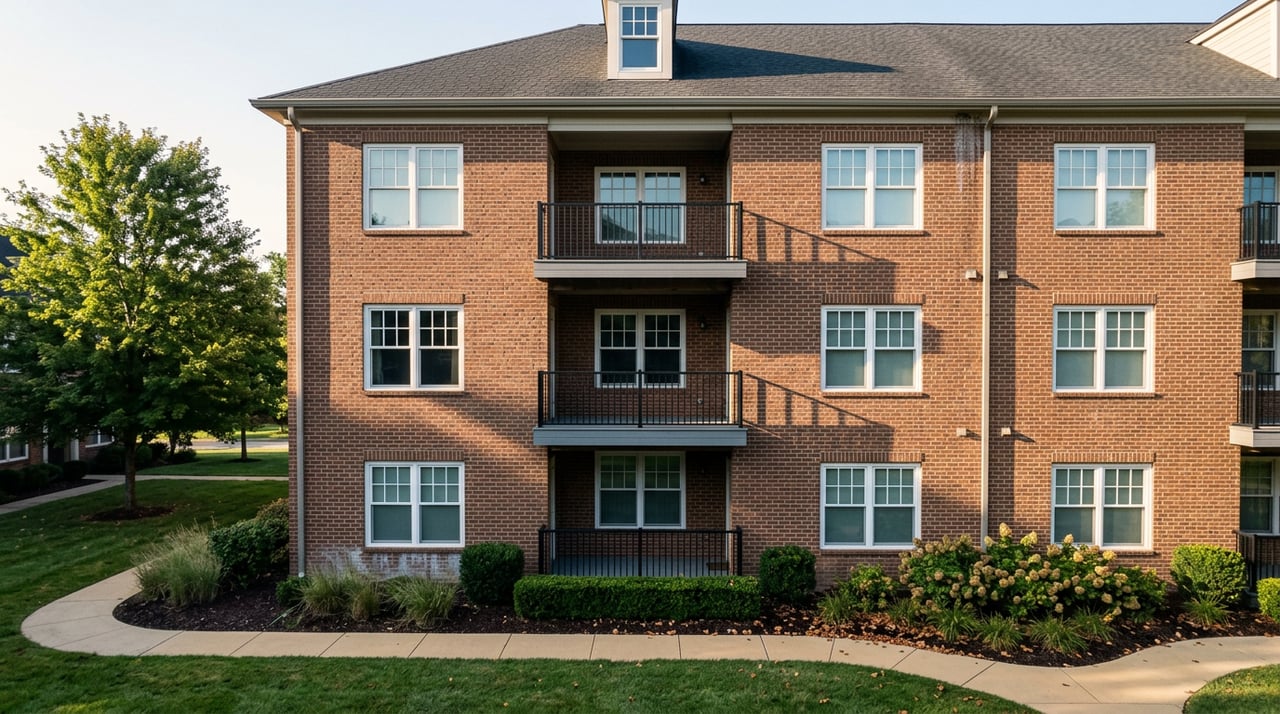
Heritage Hunt's condo structure adds a layer most single-family HOA transactions never touch. The two condominium buildings, known as Condo I on Chelmsford Drive and Condo II on Heritage Hunt Drive, are managed separately, by Burke Management and Associa/CMC respectively, and each carries its own assessments and its own disclosure packet on top of the master HOA's.
Nobody involved in this transaction has published what percentage of recommended reserves either condo association currently holds. That is not unusual and it is not a sign of a problem by itself.
What we do know is the direction the master assessment has moved. The monthly HOA fee was $355 in 2023, rose to $380 by 2025, an increase of about 7%, and climbed again to $420 for 2026, a further jump of roughly 10.5%, bringing the annual assessment to $5,040. According to Heritage Hunt Buy/Sell/Rent Guidelines, buyers also owe a one-time, non-refundable working capital contribution equal to a full year's assessment at closing, meaning a 2026 buyer writes a check for $5,040 in dues before their first regular payment is even due. Rising dues on their own don't prove anything about reserve adequacy or the settlement's aftermath. They do mean the underlying numbers a full review would examine are moving, not static, at exactly the moment the review itself is getting stricter.
What to Actually Ask For Before You Write an Offer
If you are looking at a condo in Heritage Hunt this fall, the resale package alone will not answer all of this. The routine turnaround for that packet runs up to two weeks, with a base fee of $317.95 covering the resale documents and inspection, plus $70.66 each for rush service, post-closing processing, or a statement of account, and it has to be ordered online through the association's management portal rather than requested from onsite staff.
Before you're deep into underwriting, ask your lender directly whether they will treat this as a full project review under the new guidelines, and ask the listing agent or management company for the reserve study date and funded percentage for the specific condo association tied to the unit, not just the master HOA. Ask whether the association's disclosure materials address the federal settlement. None of this is a reason to avoid Heritage Hunt.
A Few Direct Questions
Is the PPP matter actually over? The federal settlement closed in late 2025. The separate state-level ombudsman review also concluded, finding no violation of the specific statute the complainants cited. Both proceedings appear resolved as of this writing, though buyers should confirm current status directly with the association since board minutes are the fastest way to see whether anything has reopened.
How fast can I realistically close on a Heritage Hunt condo right now? The full project review requirement has been in effect since early August, so it applies to every conventional condo loan being underwritten today, not just future contracts. Between that and the two-week resale package timeline, building in extra weeks beyond what you'd budget for a typical resale is the safer assumption right now.
Heritage Hunt is still one of the more established 55-and-over communities in this part of Prince William County, and none of this changes what the golf course, the clubhouses, or the resident-run clubs actually offer day to day. It does change how a condo purchase there gets financed this year, and that is exactly the kind of detail worth working through with someone who follows this community closely rather than discovering it mid-contract. If you're weighing a purchase here, or thinking about what your own Northern Virginia home is worth as part of that plan, The Eisenhard Group can walk through the current paperwork with you and help you get your home valuation before you commit to a timeline.
This article is general information, not legal, tax or financial advice. Consult a qualified professional about your situation.